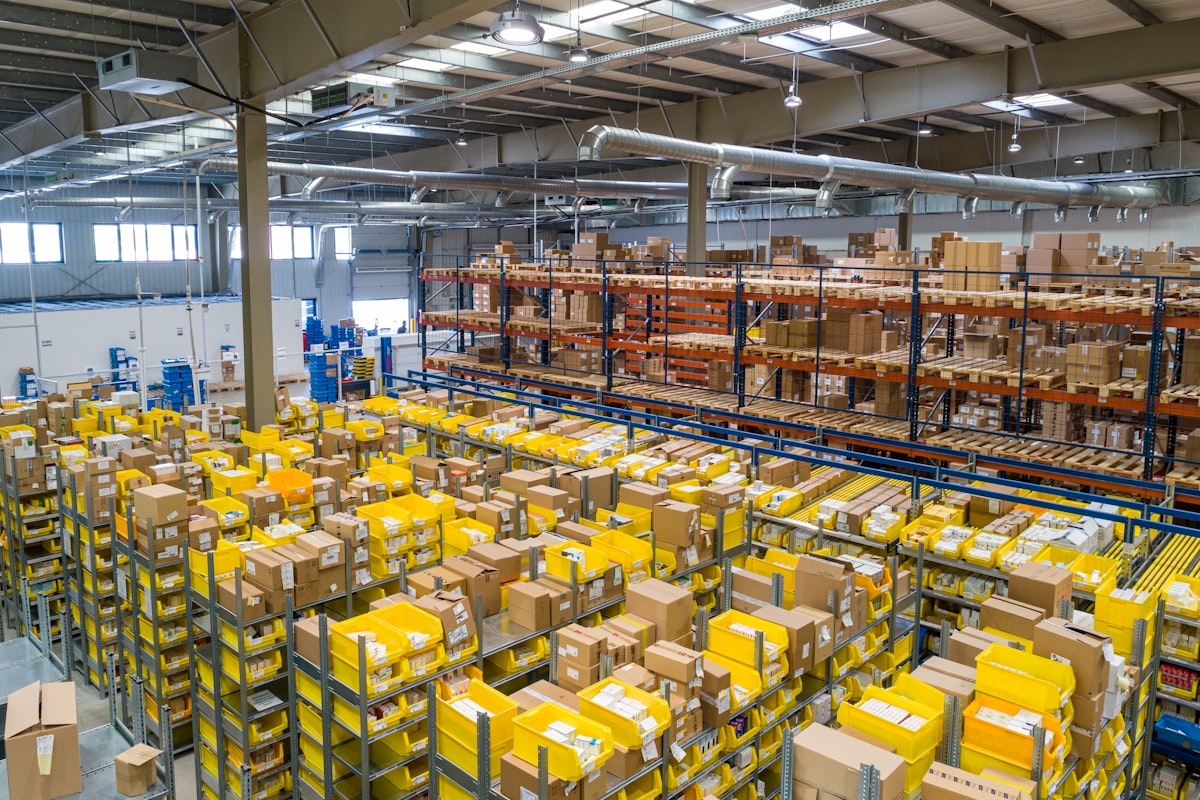
When orders pick up, packaging supplies spread across every spare surface. Boxes lean against a wall, tape rolls vanish into drawers, and labels are always in the last place you look. A small business does not need a warehouse to fix this. It needs one clear packing spot and a simple rule: every supply lives in one place and returns there after each session.
Start by choosing one packing area, even if it is only a table and a shelf beside it. Keeping everything there means less walking around mid-order, and you can see at a glance what is running low. If space is tight, a rolling cart or stackable bins can serve as the station and be moved aside when done.
Give Every Supply a Home
Group supplies by how you use them. Boxes and mailers go together, cushioning and fill in another spot, and tape, scissors, labels, and pens in a small container on the table. Clear bins or open baskets work well because you can see what is inside without opening anything. Label each bin in plain words, so anyone helping you can find things without asking.
Keep everyday items at arm's height and within a step of the table. Rarely used things, such as seasonal tissue paper or oversized boxes, can live higher up or further away. This removes most of the hunting that slows packing down and keeps the table clear.
Store Boxes Flat and Within Reach
Flat-packed boxes take up far less room than assembled ones, so keep most of your stock flat and assemble only what you need for the day's orders. Stand flat boxes upright in a tall bin or a magazine holder, sorted by size, with the most-used size at the front. Do not stack heavy items on flat boxes, since crushed corners make a box look tired before it ever leaves your hands.
Resist keeping every box size you have ever tried. Two or three sizes that fit most products cover nearly all orders, and fewer sizes mean less storage and faster decisions. Note which size fits which product on a card inside the bin, so a helper can pick correctly without measuring.
Keep a Simple Reorder Habit
Running out of tape mid-day is avoidable with a visible cue. Mark a reorder line inside each bin with a strip of colored tape, and when supplies drop to that line, add the item to a reorder list on the wall or in a notebook. Checking it once a week beats discovering an empty shelf when orders are waiting.
Finally, end each packing session by returning tools to their spots and breaking down empty cartons. Five minutes of tidying keeps the system working. Organization is not about a perfect room. It is about removing small frictions so packing stays quick and calm.